Some developers believe AI will replace software engineers. Others argue that AI coding tools are little more than overhyped autocomplete systems. Between these two extremes lies a growing amount of confusion about how AI should actually be used in software development.
The reality is that AI is neither a magic solution nor a useless distraction. Modern AI tools can dramatically improve productivity in certain situations while creating additional complexity in others. The challenge for developers is understanding where AI provides genuine leverage and where human expertise remains essential.
This article explores a practical framework for using AI in software engineering. By examining tasks such as code reviews, refactoring, debugging, research, planning, and code generation, we'll look at where AI consistently delivers value, where it struggles, and how experienced developers are integrating these tools into their daily workflows without sacrificing critical thinking or software quality.
1. The AI Overload Facing Developers
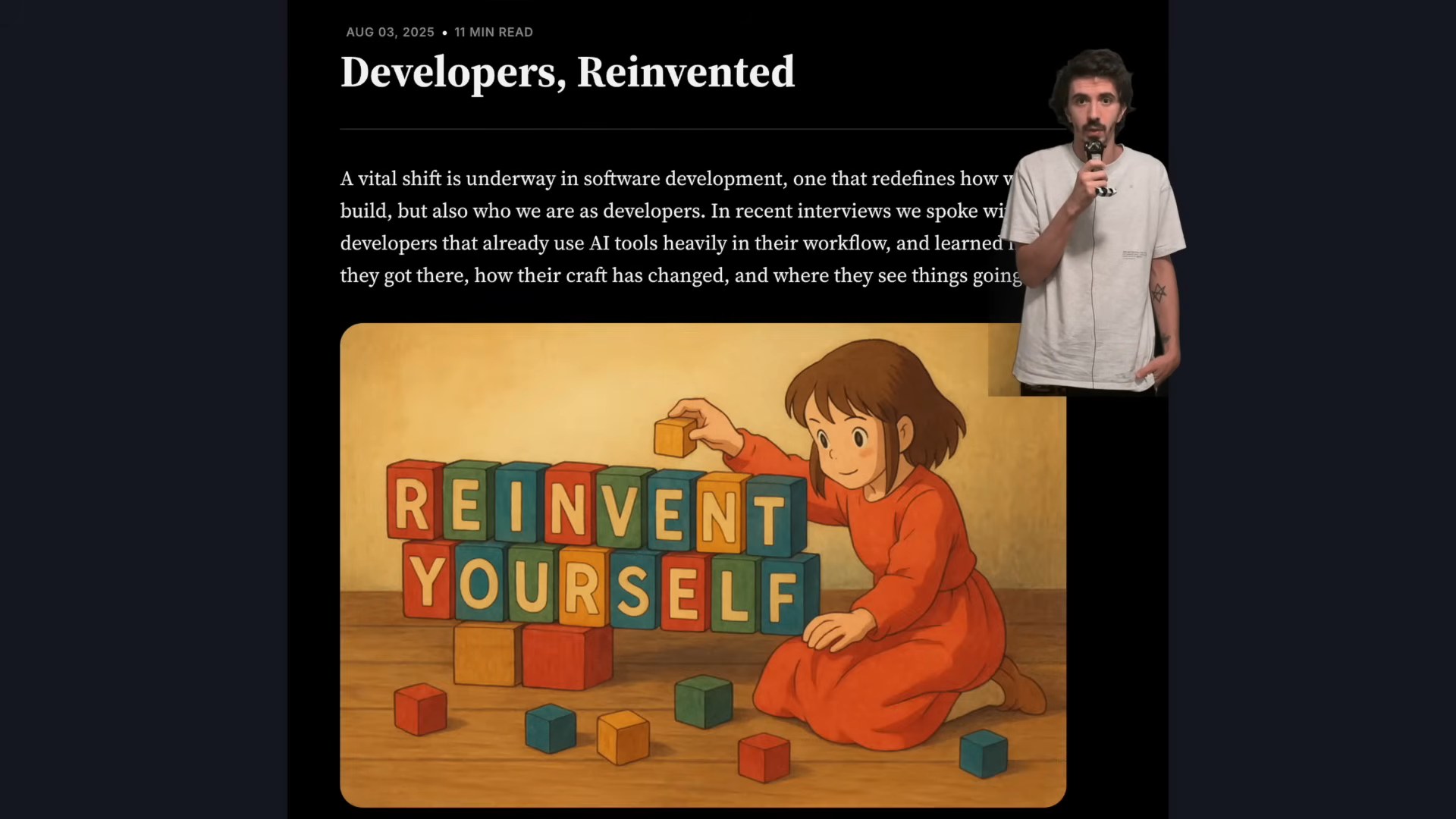
Developers today are surrounded by an endless stream of AI-related content. Social media feeds, conference talks, blog posts, and videos constantly promote new AI tools while simultaneously warning about job displacement and industry disruption.
This environment creates confusion rather than clarity. Many engineers simply want to understand how to perform their jobs more effectively, whether that means using AI agents extensively, avoiding them entirely, or finding a balanced approach somewhere in between.
Key takeaway
- Ignore the headlines and focus on practical outcomes.
2. Taking a Pragmatic View of AI
The discussion around AI often becomes polarized. Some people claim AI has solved software development, while others dismiss it as a temporary trend.
A more useful approach is to evaluate AI based on real-world effectiveness. Understanding where these tools succeed and where they struggle provides a far more valuable perspective than either extreme viewpoint.
Key takeaway
- AI should be evaluated based on measurable results, not ideology.
3. Why Both AI Hype and AI Hate Are Wrong
If AI truly solved software development, we would already be seeing consistently complex applications being built entirely by AI systems. At the same time, it is impossible to ignore the growing number of products being created by individuals who previously lacked the skills or resources to build them.
The reality lies somewhere between these two extremes. AI clearly creates value, but it has not eliminated the need for skilled software engineers.
Key takeaway
- AI is neither revolutionary magic nor completely useless—it exists somewhere in the middle.
4. The AI Effectiveness Spectrum
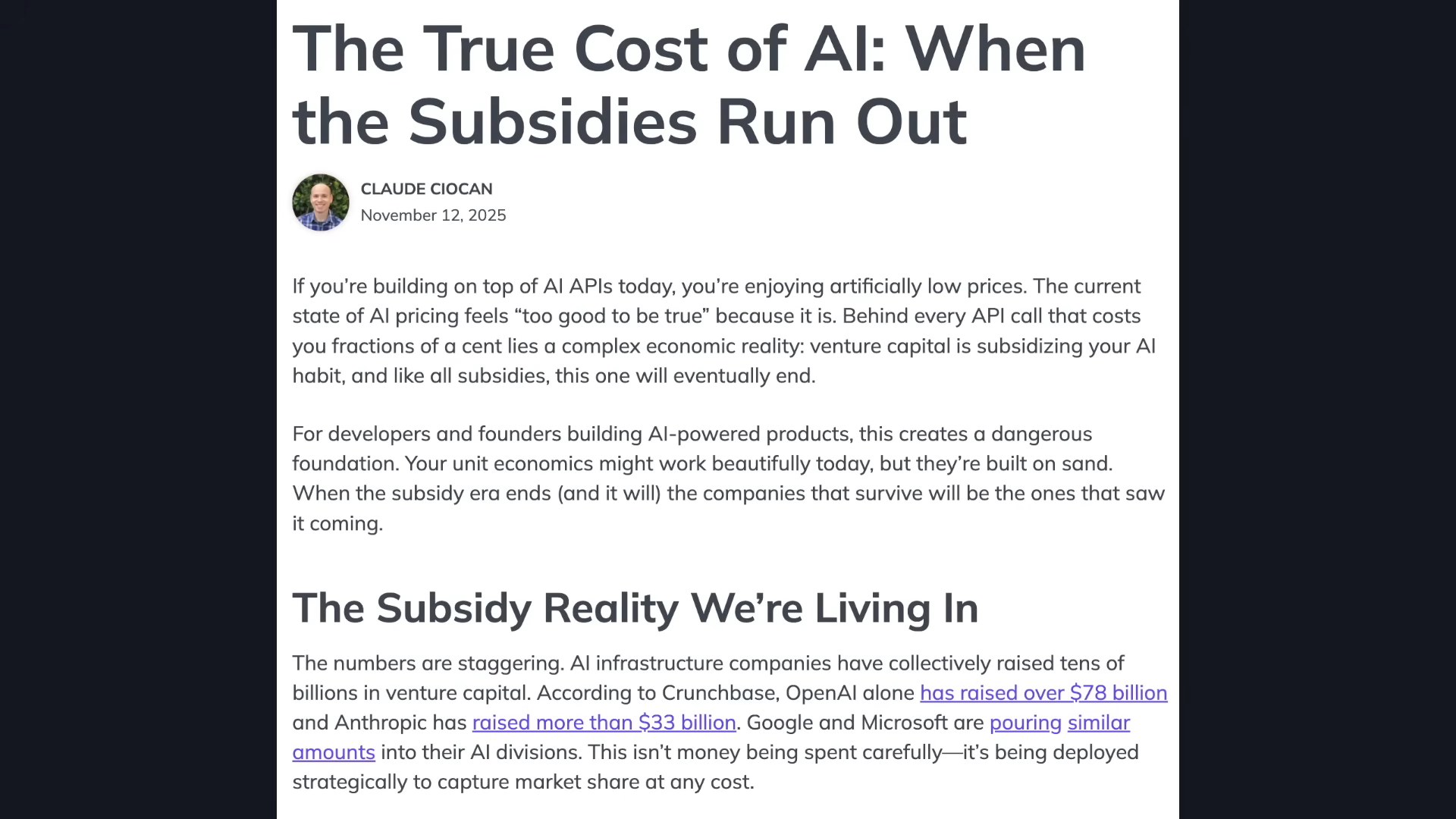
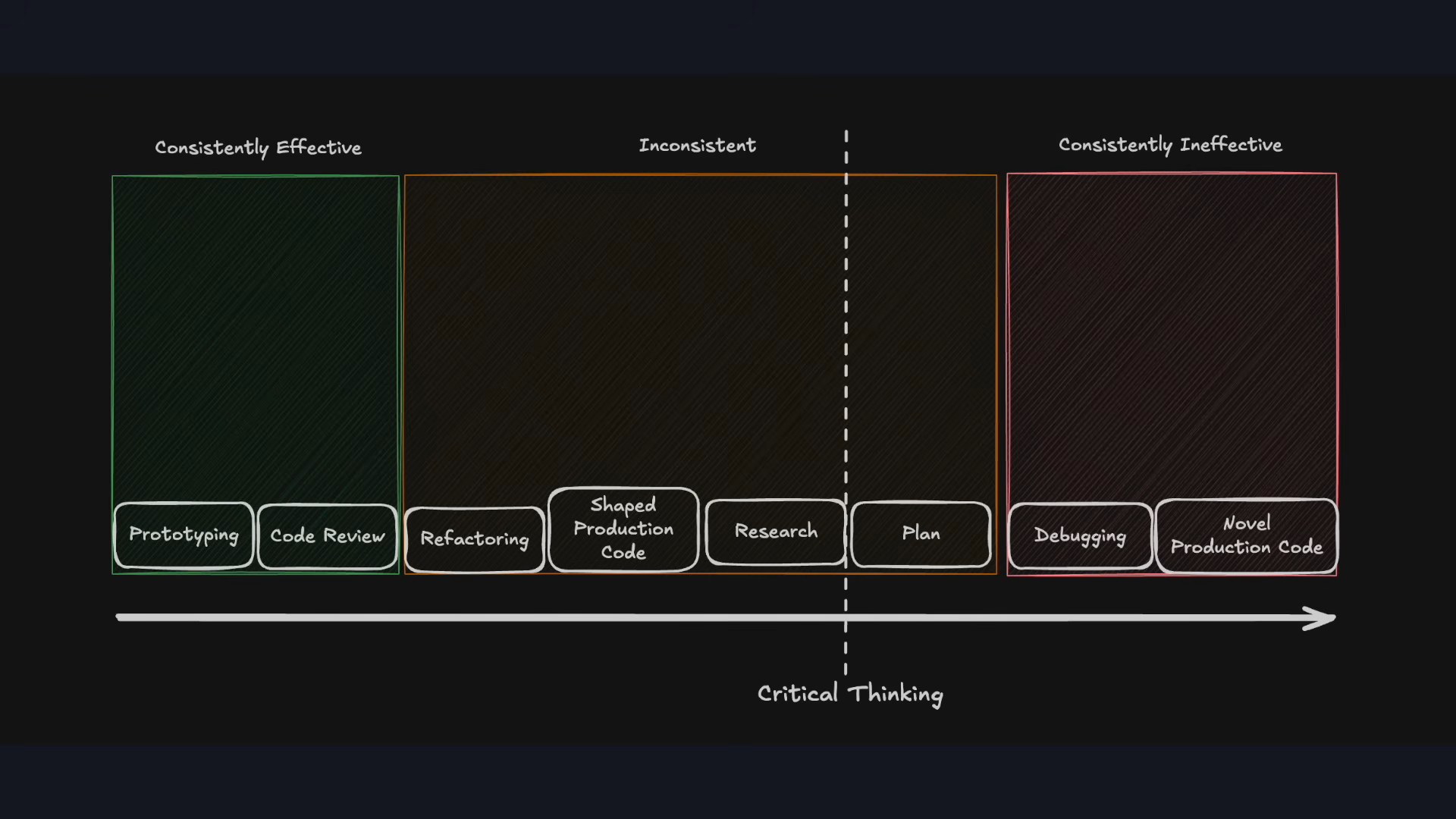
Not every software development task benefits equally from AI. Simpler and more predictable tasks tend to produce better results, while highly complex tasks often expose the limitations of current AI systems.
Understanding this spectrum is critical because it helps developers decide when AI is likely to save time and when it may create additional work.
Key takeaway
- The effectiveness of AI decreases as task complexity increases.
5. The Critical Thinking Line
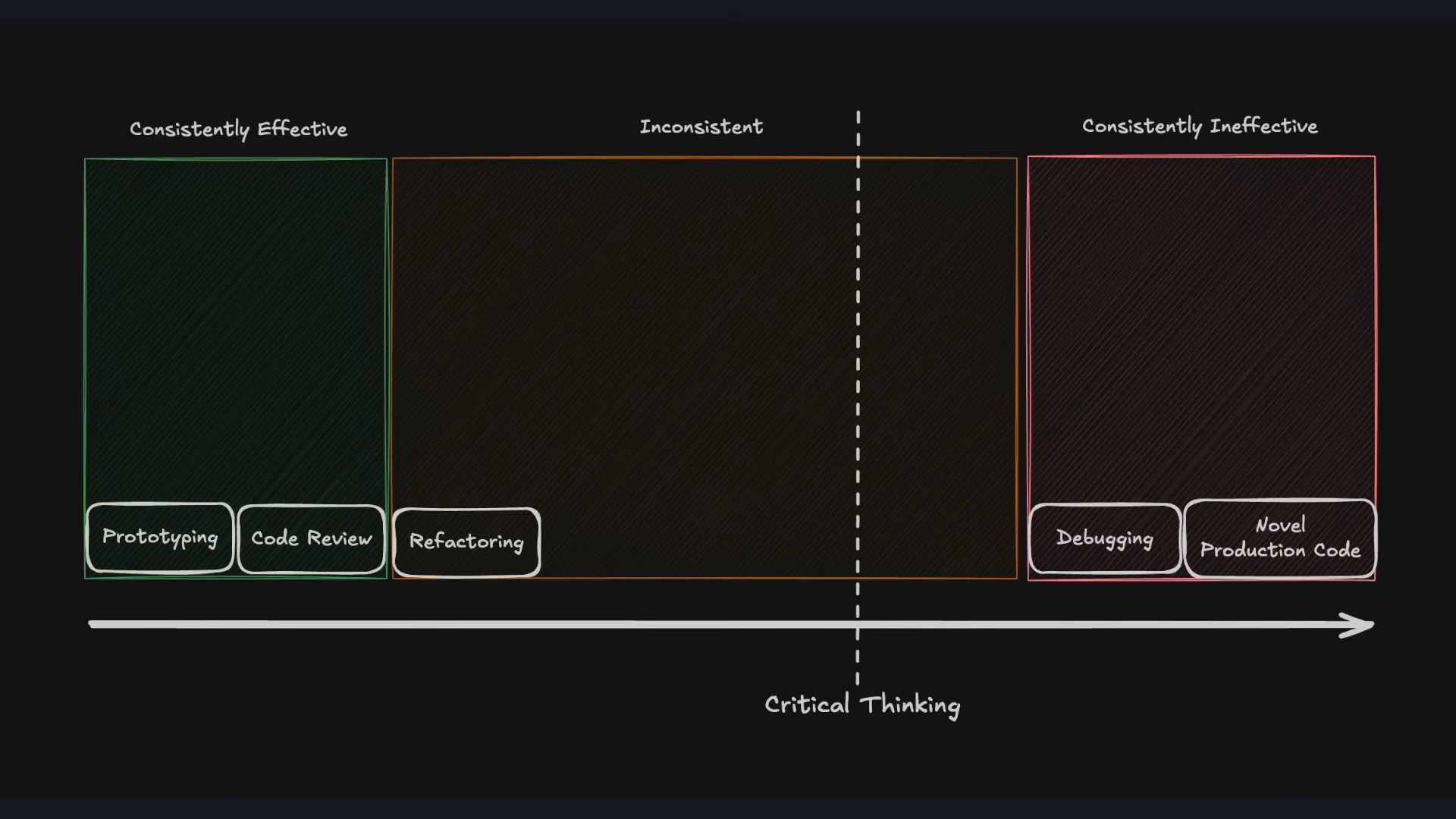
At some point, relying on AI becomes counterproductive. The effort required to verify, understand, and correct AI-generated output can exceed the value it provides.
The speaker introduces the concept of a "critical thinking line"—a boundary where human judgment becomes more valuable than automation. Crossing this line can lead to reduced understanding and poor long-term maintainability.
Key takeaway
- Never outsource critical thinking to AI.
6. AI for Code Reviews

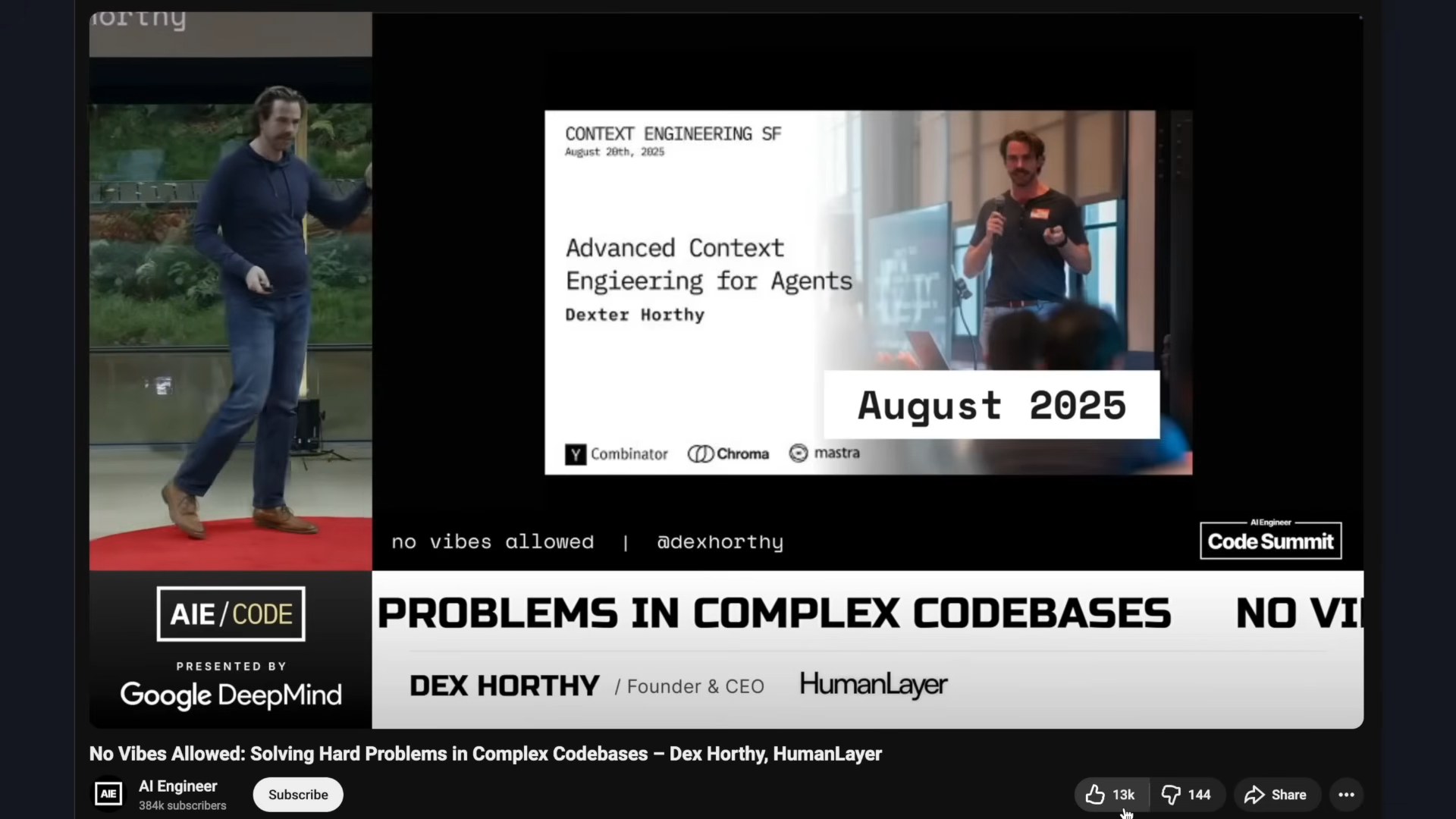
Code reviews represent one of the safest and most effective uses of AI. Automated reviews can catch simple mistakes, identify obvious issues, and reduce the burden on human reviewers.
Although AI-generated feedback is not always perfect, the risk is relatively low compared to other development activities.
Key takeaway
- AI can improve code quality by acting as an additional reviewer.
7. AI for Refactoring and Repetitive Tasks
Many development tasks are repetitive and tedious. Refactoring large numbers of files, removing unused code, and applying consistent changes across a codebase are common examples.
These tasks require little creativity but consume significant time. AI agents can often automate much of this work, allowing developers to focus on higher-value activities.
Key takeaway
- Repetitive work is often the best candidate for AI automation.
8. Why AI Struggles With Debugging

Debugging is fundamentally different from refactoring. It requires deep understanding of system behavior, root causes, and context.
While AI can occasionally provide useful suggestions, its responses are often inconsistent and unreliable when diagnosing complex issues. This makes debugging one of the riskier areas for AI assistance.
Key takeaway
- Treat AI debugging suggestions as hypotheses, not answers.
9. Lessons from Mitchell Hashimoto and Dax Raad
Experienced engineers often use AI differently from beginners. Instead of delegating critical decisions, they focus their attention on the most important problems while offloading low-value tasks to AI.
This approach allows them to maintain high-quality engineering standards without becoming overwhelmed by routine work.
Key takeaway
- Delegate execution, not judgment.
10. AI for Research and Discovery
Research is another area where AI can provide significant value. AI systems can quickly expose developers to new technologies, patterns, and solutions that they may not have discovered otherwise.
Even when some information is inaccurate, the research phase is relatively low risk because ideas can be verified before implementation.
Key takeaway
- AI is a useful tool for exploring unfamiliar technologies and approaches.
11. Should AI Create Your Plans?
Planning occupies a gray area. AI can generate implementation plans and architectural suggestions, but blindly accepting those recommendations can be dangerous.
Developers still need to understand the problem deeply before deciding whether an AI-generated plan makes sense.
Key takeaway
- Use AI-generated plans as input, not final decisions.
12. Using AI to Write Code Responsibly

AI code generation works best when developers already understand what the final solution should look like.
When existing patterns, conventions, and structures are present, AI can accelerate implementation considerably. However, generating production code without understanding the desired outcome often leads to poor results.
Key takeaway
- The clearer the target, the more useful AI-generated code becomes.
13. Why Architecture and Testing Matter More Than Ever
Strong architectural boundaries and comprehensive testing become even more important when AI is involved.
Practices such as Domain-Driven Design, Hexagonal Architecture, and Unit Testing help constrain AI-generated changes and provide reliable ways to validate them. Without these safeguards, maintaining software quality becomes significantly more difficult.
Key takeaway
- Good engineering practices become more valuable—not less—in an AI-assisted workflow.
The debate surrounding AI in software development is often dominated by extremes. Some believe AI will replace developers entirely, while others dismiss it as an overhyped distraction. Neither position accurately reflects reality.
AI is most effective when applied to specific tasks that benefit from automation, such as code reviews, repetitive refactoring, and research. As tasks become more complex and require deeper reasoning, human judgment becomes increasingly important. The challenge is not deciding whether to use AI, but understanding where it provides the greatest value.
The most successful developers are unlikely to be those who rely on AI for everything or those who refuse to use it altogether. Instead, they will be the engineers who understand the strengths and limitations of these tools, delegate work strategically, and preserve their attention for the problems that require genuine critical thinking.
As AI continues to evolve, effective software development will depend less on following trends and more on making thoughtful decisions about when automation helps—and when human expertise remains irreplaceable.
References
- Source video: I was wrong about AI coding agents — Tom Delalande
License: Creative Commons Attribution (CC BY)
This content was produced through subtitle extraction, chapter generation, and re-editing based on the generated subtitles and chapters.